Гостиница "Жипек жолы"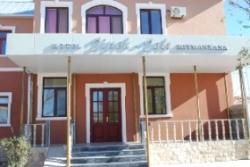
 Календарь
| « Октябрь 2026 » | ||||||
|---|---|---|---|---|---|---|
| Пн | Вт | Ср | Чт | Пт | Сб | Вс |
| 1 | 2 | 3 | 4 | |||
| 5 | 6 | 7 | 8 | 9 | 10 | 11 |
| 12 | 13 | 14 | 15 | 16 | 17 | 18 |
| 19 | 20 | 21 | 22 | 23 | 24 | 25 |
| 26 | 27 | 28 | 29 | 30 | 31 | |
 Погода в Нукусе
The History of the Museum
The house museum of the spouses Amet and Ayimkhan
Shamuratovs is one of the first private museums in Uzbekistan, a sight of
Nukus, the capital of Karakalpakstan. It was founded in 1999 by the personal
funds of the Shamuratovs children. The museum contains the richest collection
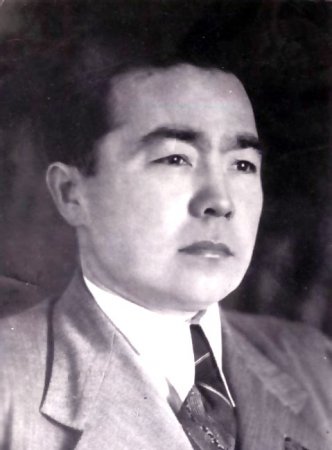
of Amet Shamuratov (1912-1953) who was a writer, a poet, a playwright, a
translator, a statesman and his wife
Ayimkhan Shamuratova (1917-1993). She was one of the first woman in the history
of Karakalpakstan who played on the theater stage. She played a hundred-odd
roles and had a unique voice.
The spouses of the Shamuratovs took an active part in the formation and
development of a Karakalpak culture, literature and art of the twentieth
century.
A biography and works of Amet Shamuratov
If you imagine literature as a big stage, then every creative person on this stage tries to leave behind valuable works to the future generation.
One of such people in the 50s in Karakalpak literature
was Amet Shamuratov, he was a prominent representative of literature of the
twentieth century, making a significant contribution to its development and
formation.
He was born in 1912 in the territory of the collective farm called Kalinin,
Khodzheily district, in the family of a poor farmer. His parents passed away
when he was young. Early orphaned, till 1926, while he lived in the family, he
studied in the old Muslim school. Between 1926-1930 he studied at the «Kommuna»
school in Chimbay district, and then continued his studies at the Kazakh school
of Orenburg, (present Russia).
He began his career as ateacher in elementary school, worked as a district
inspector, a secretary of the executive committee of Khozheliy district.
In 1932 he entered a Rabfak School at Moscow Veterinary Institute, where he
studied from 1933 to 1936. Almost all of his subsequent life is connected with a
creative sphere.
So, from 1938 to 1940 he was a head of the department of fiction of
Karakalpakstan.
From 1940 to 1941, Director of the State Publishing House of Fiction Literature
of the Uzbek SSR in Tashkent.
The most productive activity for Amet Shamuratov was when he was a deputy
chairman of the Council of People's Commissars of the CCAA (1941-1944), where
he supervised the activities of cultural scientific institutions, creative
organizations and public education. He was actively mobilizing the entire great
spiritual potential of Karakalpakstan and creative intelligentsia to ensure
victory over the enemy of World War II.
Then from 1945 to 1947 he became a director of the State Publishing House of
Fiction of Uzbekistan.
From 1945 to 1947, Amet Shamuratov was also a deputy director of the Karakalpak
scientific research institute of language and literature and head of the office
of arts at the council of ministers of the KK ASSR.
From 1947 to 1950 he became a student of the higher party school in Moscow.
From 1950 until the end of his days, he worked as a deputy chairman of the council
of ministers of the CCAA, a chairman of the writers' union of Karakalpakstan
and a secretary of a Nukus city executive committee.
Since 1939, he was a member of the writers' union of Karakalpakstan.
The works of Amet Shamuratov are familiar not only in Karakalpakstan, but also
abroad. He wrote the first story for children of Karakalpakstan. His novels
called "In the old school” and "My meetings with tigers” brought him deserved
fame, and the last author-witness of the event gained fame as the founder of
adventure prose in modern Karakalpak literature. Here we are talking about one
of the most powerful animals of the nature, of the tiger in the valley of
Turana. All works are based on real events.
The creative heritage of Amet Shamuratov includes works, poems, novels, dramas,
translations. The general tone of works
of the poet is a sincere pride in the labor success of the people in work and
in the struggle against enemies during the war.
A number of
works are also devoted to native nature.
Over the years of his life, several collections of verses and poems like "Sauga"
(Present) (1940), "Songs of the Motherland" (1943),
"Happiness" (1949), "Selected Works" (1954-1963) and others
were written by him.
Poems and stories of Amet Shamuratov repeatedly republished not only in
Karakalpak, but in Russian in Moscow, under the general title "In the old
school” (1979), and a collection of his poems "I Love” was published in Uzbek
(1956). On the stage of the Karakalpak theatre named after Berdakh some plays
of Amet Shamuratov were staged. The names of plays are "Daughter of Aral”
together with a writer J. Aymurzayev, also a prominent writer and "Kirk Kyz”
together with a writer I. Yusupov. After the death of Amet Shamuratov his works
were completed by IbraimYusupov.
Not just works, but also translations of works by Russian writers as I.A.
Krylova, A.S. Pushkin, M.Yu. Lermontov, A.P. Chekhov, M. Gorky and other
writers belongs to A.Shamuratov’s pen.
The merits of A. Shamuratov in the development of culture and economy of Karakalpakstan are highly appreciated by the government. He was twice awarded with the Badge of honor, with medals and diplomas.
He was elected twice as a deputy to the Supreme Council of Karakalpakstan by the presidium of a supreme council of Uzbekistan and supreme council of Karakalpakstan.
Amet Shamuratov lived short, but a fertile life. His works have been always reflecting on our hearts.
About construction of the museum and its builder
After the death of Ayimkhan Shamuratova in 1993, her children decided to build
Amet and Ayimkhan Shamuratov’s House Museum. For this reason, a plot of 12
acres was allocated by the government of Karakalpakstan. It was near the house where Ayimkhan Shamuratova
lived.
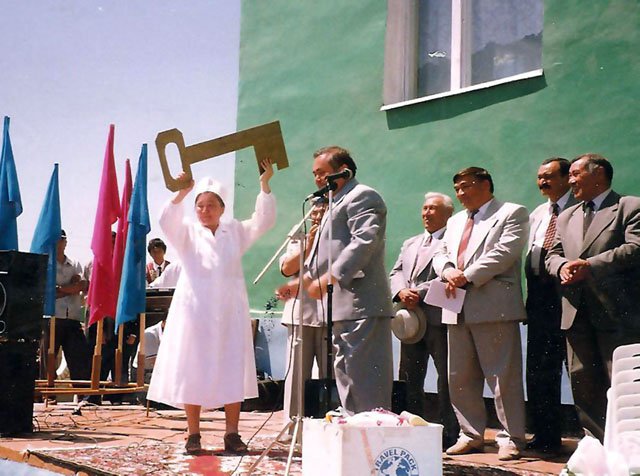
The construction site was headed by her son-in-law, the honored builder of Karakalpakstan – Tauybaldiev Sultamurat Karlybaevich.

Taubaldiev Sultamurat Karlybaevich was born on May 9,
1947, in the family of a dekhkan - a poor man in the Sverdlov state farm of the
Leninabad district (now the Kanlykol district), where Ayimkhan Shamuratova was
born.
He studied in Karakalpak school. From childhood he was interested in
mathematics, participated in school, city and republican Olympiads. His childhood was hard. His mother died when he
was 9 years old.
His elder brother Abdibay studied in Tashkent at that time. Sultan and his two
younger brothers - 6 years old Erezhep and 6 month Bazarbay were left without a
mother.
Despite a very difficult childhood, Sultan studied perfectly well and after
graduating the school, he went to Moscow and entered the higher technical school
named after Bauman.
Successfully finishing it, he entered in graduate school. After graduating from
graduate school, he came back to Nukus, and married Ayimgul, the youngest
daughter of Ayimkhan Shamuratova.
In Karakalpakstan, under his leadership, many houses of rural areas were built. He also built kindergartens, schools, mosques, state institutions, hospitals and so on. There is probably no such corner in Karakalpakstan, where Sultan would not participate in the construction.
He loved reading
books from his childhood. He collected a large collection of books of world
classics. Sultan also was a lover of music. He used to listen to world classics
of Chopin, Mozart, Tchaikovsky, Muslim Magomayev and of course he loved
Karakalpak songs based on lyrics by Berdakh, Azhiniyaz, Makhtymuly performed by
A. Khozhalepesov, Genzhebai Tileumuratov, Amet Tarihov, Turganbay Kurbanov, and
also was fond of listening to the songs performed by Ayimkhan Shamuratova. He
admired her and said that Ayimkhan Shamuratova was a model of imitation for the
younger generation.
Since 2004, the disease has been creep up to him. He had II type diabetes. He
had surgery on his eyes, as a result his vision was 30%, then his kidneys
failed, and at the same time the gangrene of his right leg began. In Tashkent,
he was on dialysis for 6 months: then his son took him to Pakistan for a kidney
transplant. He underwent a kidney transplant, and in the same place his right
foot was amputated. Sultan was brought to Tashkent in a very grave condition,
and then, at his request, to the city of Nukus. The doctor Kholodova, who
observed the patients after kidney transplantation, examined him and said that
he only had one month to live - it was November 2006. But Sultan did not give
up - Dr. Ramil Sherlanov began to treat him.
Exercise, the will to live and the right treatment showed its results. Sultan
continued to live began to drive to work, drove in a carriage to the car, and
then he sat down near the driver, so he helped his eldest son, who headed the
house-building factory, after him in the work of the plant. He built two
many-storey houses, two schools in rural locations, each 150 km from Nukus, in
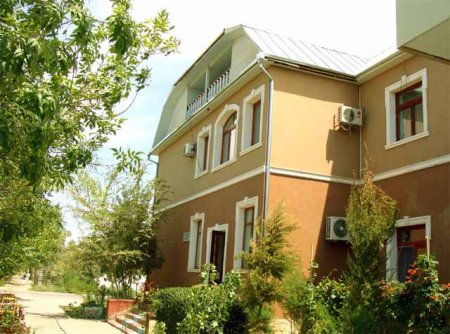
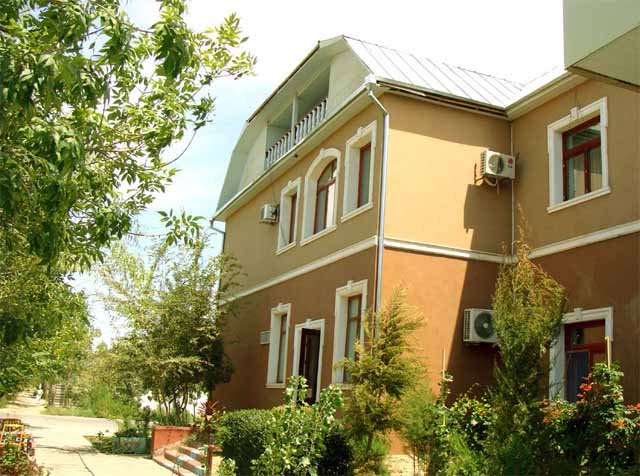
the town of Mangit and in the town of Kungrad. Near the museum of Amet and Ayimkhan
Shamuratova he built a hotel called "Jipek-Joli" ("Silk Road”) and
also participated in the period of a construction of a new hotel building.
He helped his son to build a college.
Despite the diseases that tormented him during sleepless nights with a fracture
of the hip joint, he continued to work. When all the relatives told him that he
did not have to work, he replied that as soon as he arrived at work, he felt
better and better.
Here we unwillingly compare him with Ostrovsky and the hero of the USSR
Maresiev. Karakalpak Maresiev !. He always helped people, sympathized with
them, was sick for them, he loved people, friends, relatives,his wife and children, grandchildren.
The only thing that was very tragic was that he could not hear his favorite
tunes at the end of his life.
In honor of Sultamurat Taubaldiyev, the builder of the
Shamuratovs Museum, a documentary film was shot by Tashkent documentary
filmmakers and the book called "Trial of Fate” was published in Tashkent in
2012.
His doctor Ramil Sherlanov composed a poems him.
Poems of Sherlanov, the doctor
In memory of Karakalpak Maresiev, Sultamurat (Dedication to my patient Sultamurat
Tauybaldiyev)
With a serious illness you fought,
Though he lived with a transplant!
Blind, deaf, left without legs,
But he was always in the ranks of people!
Though I felt pain when shaking,
You did not spare yourself in your work!
And wheelchairs
Peace asked from you!
You lived, you thought, argued with everyone,
He wrote stories and poems!
They will open to everyone once
Your spiritual touches, (stitches)!
Good bye, my friend! I do not forget
Your judgments subtle mind!
I will always remember you,
In me you lit a lot of thoughts!
(R.A. Sherlanov, Nukus, March 14, 2011)
We also would like to thank the people who helped in the construction of the
museum. Under the leadership of Sultamurat Taualdiyev, below listed people
helped to build the museum:
Musayev Abatbay - Director of the Takhiatash Concrete Plant.
Bayambetov Myrzagaliy - head of the Kungradsodastroy union.
Palekeev Zhumabay - Head of the mobile transport company. Tahiatash.
Esnazarov Artykbay - Director of the private firm "Aydin"
Begzhanov Medet is a businessman and a Grandson of Ayimkhan Shamuratova.
We express our gratitude to all builders from the public and culture of
Karakalpakstan, as well as to the Shamuratovs family.
 Подобные новости